Búsqueda personalizada

domingo, 18 de enero de 2009

To escape from the frame

1 Impressionism


Impression: soeil levant, Monet (1872)


Trying to remember how I wrote this in a past life, I can't help but underline the importance of being in the right place on the exact moment magic was happening. Impression: soleil levant, Monet, 1872-73.
It's with this painting that the term Impressionism becomes a movement that will group a series of veteran authors possibly disoriented or still looking for the convincing theory that would put them on the route for a new era.


That painting (whether it had that intention or not) is a declaration of principles of what this aesthetics would be about.

The effect light creates while it lands upon the objects for just a second, the visual printed mark, as if from a stamp. The snapshot that lasts until a cloud passes by or a breath of air, and deformes it. Hence its fragility, its weak appearance as if it will crash or break from one moment to another.
It's a recreation on delicacy. It looks sacred.


Of course, each one had its own style and tried real hard to find their peculiar signs to be distinctive, but they all have common patterns. There will all be completely subjective works, with the same elements basing its theory; like at the beginning of Pointillism (technique that consists in construting an ambient or siluet by making small points normally using the primary colors so that when you take a certain distance, in perspective, you see a solid composition).


At this point, we must take a look at the predecessor generation (even if contemporary) and pay special attention to masterpieces and proper names like: Rain, Steam and Speed (1844) by Turner, Le Déjeuner sur l'Herbe (1863) by Manet, or Seascape Study with Rain Cloud (1824) by Constable. What do we see?


Rain, Steam and Speed, Turner (1844)


Le Déjeuner sur l'Herbe, Manet (1863)


Seascape Study with Rain Cloud, Constable (1824)


The concern about not necessarily objective and obvious figures, but the opposite, was already there by then. To reproduce images by heart and memory, rather than head and eyesight sometimes. Treating the argument as if a past dream, with its secrets and its mistery. Normally provided with peaceful or even chearful realities. Daydreams with a slight contribution of calm, rest, even idleness... The message (if we strictly must look for one, apart from beauty) is usually quite flurry, because the speech of the painting is the admiration for light above of all. We find developed structures full of color and brightness; the consecuence of a precise study based on elegance, but much braver than as we saw in Romanticism.


As we would have expected, this breaking of the previous rules was at first shocking for a public -more than used to make fun of any new line of arguments-, but even so, they fastly started to get interested in the fact that they now become part of the painting. They must include their thoughs and fears, their ilusions, themselves, in order to understand it. It had become an exercise of empathy. There's a need for the spectator to act as a free but dependent individual and participate; interact with the proposal.

Its ilumination takes on the siluets a sort of respect so that it sure puts you face to face to intelligence. It takes you out of daily routine and boredom, cheap and insipid everyday experience and throws you away believing for a moment that you really belong there, as if we could jump into its 4th dimension, breathe inside, and feel at home.


The decisive instant expressed in the most subtle sadness (meaning somehow it's an artificial subsitute for happiness, but let's no go in there...), and you're involved in it, feeling its commitment.

I guess that's the clue of sensitivity. Putting in contact nature and your conscience to your inner soul, through art. Or what we call art, or where some other may find God.


We might as well call this paintings ghosts, as in all of them we may find a kind of loneliness willing to be heard. One gets absorbed and lost in its own thoughts regarding these captured scenes, and sighs unconsciously "I understand you" or "I know, I know...". It's a shared intimicy, nobody's looking, nobody'll judge you, it's honest as ever, we're sensible beings with nothing to prove but ourselves. And there you'll feel love. Or anger. Or whatever it is you're supposed to, or all the opposite. That's not really what matters. Its single destiny is to evoke you something, to make you feel. Any emotion.


It is no longer the what but the how the greatness. It not necessarily needs to carry within a specific message, nor give you an answer if it doesn't throw you back as well a new question. It's tricky, it's a game you know you're not ready for, but that's part of the fun and you're the one whose decided to play. It doesn't teach you morals if at the same time it doesn't recognize their own sins, in my opinion. Instead of politics, let's focus on the sensation. Dislodge feelings.


The Dance Class, Degas (1876)


Dance at Le Moulin de la Galette, Renoir (1876)


Le Moulin Rouge sous la pluie, Delacroix (unknown date)


The same thing was happening in literature. We were leaving behind romanticist melancholic vision, and starting to experiment through much more exciting and vitalist  paths. Wondering what will happen (because we're still human beings and that's our nature), but with a new belief and faith in things to prosper. A new desire, full of passion and fortitude. Day by day comprehending that it was their (en cursiva) time. The confidence needed in any revolution.


2 Prose poetry about Vincent (forever provisional)


"That doesn't keep me from having... a terrible... -shall I say the word-... religion.

Then I go out at night to paint the stars" Vincent Van Gogh


The Starry Night (1889)

[It's so difficult to separate Van Gogh's personal life from his theory and technique and his sublime thoughts about beauty, life and love... almost impossible...

so, as I see it, should we?]


Loneliness inside one's own images, obsessions and past... is still loneliness, unless you're truely together with something, in contact with nature, even if it's not nature but divinity; you name it.
Each one looks for shelter wherever shelter chaces back, and all the love you're giving, will somehow find its way home through a search that'll probably last as long as the hallucination. If we're really here, we must prove it.


Possesed by madness before color, and possesed by color rather than shape or notion of time. The delayed influence of the weather. Nights can been brighter than days, and days asphyxiated studying power. To remember is to hold the whole world upon a paintbrush, and brush its imperfection with the joy of a child that has a hiding place against monsters, and still doesn't want to believe in common reasons to cry.


With eyes wide open and hunger of definition, to give shape to the wind, to convert air into a myth. Expanding the light beyond the tiniest spotlight until the shadow finally dissapeared and by nervous contrasts, kill the evil and the misunderstood.


Medicaments of oil asked in letters to a brother. During the experience there is no pain. Stimulus everywhere, from the electric lights reflected on calm water, to a pair of worn-out shoes or gnawed chairs, when identification overcomes compassion.

Drunkenness challenging the end of the summer, poverty laughing in the face of cats. Humble peasants rulind the land, because this time, "indirect/unconfortable" facts are the most important.


The Potatoe Eaters (1885)


Borges used to say "I'm not as proud of what I've written, but of what I've read". In this case, shall we pay homenage to those things we've seen, fearing our blood might just paralyze, or inevitably dry out.

Anything is susceptible to be observed by that perspective's eyes. From the moon to the most insignificant speck of dust. In a cold society fatten with new-riches, who'll pay attention to the one who's paying it to the leaves that deviously fall, as a delicate lady?


To risk your life for what you believe in. Only the brave will trascend. Each trace faster than the previous, as if run away, filling virginity with life, and silence with speed and vitalism. Urgency to reach the other side. To redeem the God carried inside.

I'm looking for the face I had

Before the world was made   YEATS, The Winding Stair


An explination on what we've been figuring out along our walk through this ruines. Getting nearer to who we are. Recognizing our illusion for inner peace, because come what may, and forgiving what we may have done wrong, art will be there to free our thoughts.


All the illness and insatisfaction can be transformed in a strength capable of joining the spring and the laughter. It can become a declaration of love and an answer to the inhaled sensations from the cosmos.


Olive Trees with Yellow Sky and Sun (1889)


A forever lasting search of new expressions, defining a style that'll never end. The will and the latent changing of the period. The fight, the survival. Tomorrow can wait, now I'm busy and devoted.
Passion as the sense of life, inhereted from love and truth.

What we already know will always be there (traditional certainties and concepts), but could might as well be consolidated on mistakes or antagonisms. Being a visionary, is to know because you've felt it that way, that there has to be something else beyond these nightmares.

The sharpest moral lesson can only be learned by graving the mix between thought and feeling in the very second it passes by. To tell it later to the rest of humanity, to be able to purely do that, involves a kind of magic we usually confuse between religion and art. It's not intellectual anymore. That knowledge must be consider spiritual.


Do you know what makes the prison disappear?
Every deep, genuine affection VAN GOGH


He who's flowing as an exclamation mark and values extreme sincerity above of all, will fall to sadness' hell and reemerge from ashes better than live a laid-back and secure existence without emotion in their veins. It's a matter of freedom to use red and yellow as a choice to face life. Screaming happiness is only possible when you understand it. And to deeply deal with certain ideas one must be open minded, brave and secure of himself. Knowing it's an unpredictable trip, but worth it.

He who's ready to win the war, must not be distracted. In touch with Inspiration and the essence of things, from his soul.

Shores from where one is, and the rest of the people, drift apart since the decission is made. And that fate entails the end of what we name social. The differences between one and other are bigger than the similarities. It's a sentence, a fatal psychological crossroad, a doom. In a picture, the impression of everything melting.


A man is what he does. What he's received and his acts. His personal experience.

I think one of the roots of Van Gogh's pain was precisely the fact that his secret would never see the light, but way too much has been said about Him, and I still wonder if we're ready.


A long time ago, some friend of mine asked me "how could he draw such vital paintings under such sorrow...". And I answered: he was ONLY happy painting.


3 Contrasts

To raise fleetingness as one of the principal concepts (whichever the theme should be: still life, landscapes, models...), is a clear sign on a easy falling in love mentality. The fact that it's now or never, the precise situation, to surrender to what their seeing.


Sheer surfaces, hidden under steam areas, eerie halos... are left behind. Postimpressionism, with authors like Gauguin, Toulusse-Lautrec, Van Gogh or Cezánne make an effort and bet for more cheerful ambients. Even under complicate circumstances (and we must remember this is before the first World War), recall Beauty as they once saw it, happiness. The dances, the lovers, the peaceful countryside. To express light by its comparison to darkness (in both senses: the painting and real life, always siamese). Motion creating sounds, windy melodies...


If independent visions and opinions about what a painting should express and the way to do it (meaning in which quantity we'll include sensibility, in which technique, what should the theme rely on, etcetera...), is able as it is to conmensurate a consolidated movement such as Impressionism, we can feel saved. That means there's still hope for individual and brave new propposal. More than tired of arguing about the eternal conflict on simplicity and if formal gentleness is necessarily doing things slowly, it's still possible to rescue from boredom your own present.

I'm not saying there's anything wrong about the agreement on certain schemas, but doesn't it involve an extra merit to do just whatever you feel like? Couldn't that be an improvised definition for freedom?


4 References

- Larousse Enciclopedia, 1971


- VAN GOGH. V, Letters to Theo, Madrid, Paidos Iberica, 2004


- Espasa Enciclopedia, Espasa-Calpe 1998

viernes, 9 de enero de 2009

3000 palabras para T.S Eliot

1 Going deeper into the etcetera


The fact that nowadays we can still find clasicist authors, must not only not take us by surprise, but indeed make us realize how hard it must've been for new views to develope and make themselves space between the old patterns, understanding that this contrast is in fact its encouragement and principal incentive. End of the 19th century, beginning of the 20th: what do you exactely mean by Modernism?


Now that we know poetry will never tell us the world such as it is (should we find out by newspapers?), but as it should, -we read this a long time ago from Cervantes himself actually, and we find its real origin in the epic novel, however...- Now that we accept to play the game because something inside us tells us that's Truth; and learning that at the end of the day, it's all about mind's projection and the poem the reader needs... We may start recognizing this movement, at least initially, a as revolutionary response against the traditional parameters. 

The very first seed related to this "war" can be founded on Kant's approachments, but let's skip a few steps 'til the case we're now dealing with.


What was poetry back then, what is it now, what will it be?
It's the same question with innumerable answers. Mines is hope.

Where do poems go once they've been read, where when they haven't? That's a different matter, but in any case, I guess to the back of our heads. Somehow that's what happens. There's a misterious sense down there giving us small clues of what exists already, what will, what should. We all carry that, within.

The word itself modernism is just an excuse to distinguish from and condemn old tendencies,
a provisional name for something boiling on desire but still under construction, even though there were voices and facts in the ambient, such as Picasso, Braque, Matisse, Gropius, Van der Roe and vanguards like surrealism and dadaism.
It certainly was a creative environment, a conceptual explosition of where art defines its way through the interwar and those concrete societies. It was a natural reaction facing the unbreathable circumstances.

Future was on their side. The promised land. New routes and possibilities to search for, challenging the past, burying it as the public reacted. Something big was happening.

Meanwhile, countries that still had the bourgeois point of view controling the scene (such as the U.S and the U.K), rejected whichever propposal of extreme freedom, since that could carry themselves problems, in the sense that they had themselves become a matter of criticism.

A good examples of this could be Metrópolis, by Grosz. A love/hate declaration to the city, a place that gives you all so later it can snatch it again away from you, leaving you worse that you were on the first place, embarassing you. That contaminates you with its toxic cynicism and hypocrisy.
There's no room for no one there. And at the same time, where to go, what's all the rush?
Can't you people relax and forget for a second about money and appearances?


And so it is, that on this frame of formal limitations and aesthetical posings, searching for beauty and genuine structures, we may fall with Yeats and Pound on the afterlife question that at this point they argued about: who's this poetry to? why should a poem finish? what's expected?

And that's when Prufrock by T.S Eliot comes to mind, because it follows Mallarmé's resolution
"a poem's made by words and not ideas", as well as the symbolist fashion, and the imaginists sounds (which ocasionally could've turn down as a dilemma: the musical phrase rather than the metronome; verses must be pronounceable!).
I understand through this poem why the Beat generation was also impressed. It has a very american atmosphere, almost like Whitmann. Woody Guthrie could've wrote it, or Bob Dylan.
It's as if you hear his voice all around.
It talks about indecissions, coffee, one-night stands, hotels, women that come and go, evokes gravity, includes dialogue, involves us in it...
And it's from 1917, you haven't read non of that until now. It's been considered the first modern poem in English language, and its key is the shape. Sharp and liquid at the same time.


Before this moment in time, it was clear the poet was creating the poem. Constructing it tear by tear. And in that exquisite context, the genious will make its way through 'til he bleeds to death.
The diference between now and back then, may be as simple as saying "I'm dying", instead of "my spirit's leaving me behind" for example. Both evoke death but have not quite the same meaning, do they? What's more true? It depends on the feeling when the time comes, and modern schemas are telling us about the moment in a complete exciting and realistic way. Without the flowery.


The reason why other writers hadn't gone that far before, may have been because of the reputation. Nobody wanting to be called vagrant, they rather smoke their cigarettes in large cafés, rather than crawl the streets looking for the soul and blood of the planet. Because that's not what you're supposed to do when you're an intelectual, is it? Because the rime, because the natural motifs... and sometimes coughing is better than day-dreaming. Going back to the experience, and not the platonic muse you may've been sure of having touched, but has she ever really touched you?

It's just another stile alright, but sometimes you rather scape from infinite tricks without a beginning or an end and try luck on the receiver's own contribution to finish things, or even fix them, been a little more humble. Eliot himself admited several times in public his insecureness, his doubdts. And didn't have a problem in asking a colleague such as Hayward to correct and help him out with the Four Quartets, for instance.


Maybe, and just maybe, that's what modernity's all about. Allowing the poem to flow by its own, becoming a puzzlement even for the writer. Leaving the instinct follow its way back home; heart rather than head. Letting it come if that's its destiny and not forcing it. Watching it pass by through the bar instead of on the paper without the fear of forgeting it even if makes you angry.
"Everything's poetry except for poetry", and the pain of its criticism.

New authors bet for simplicity without loosing the academic matters base. Much later think about the Beatles. Think about what Pop has made for the world: talking in a language everybody understands, accesible as the air, showing morality in the exact dose everyday-people will assume it.

But back to our issue, what we slowly suspect along the journey is that it's a mistake to look for the poem, to want it, just like been a poet, or even just been called one. To want to write a poem is the best way to destroy it. Or never give him birth. Non-born fire. In fact it's very pretencious to believe we're the owners of the poem and not the other way around, I mean, we're just a tool (Plato said). Ideas and inspiration are the ones that take possesion of us, we must never forget that. Like dreams. Like luck.


If we enter in the spiritual field, that's another tramp, but it gets even clearer: don't WANT anything, don't be so evil. Let it grow and come to you.
"You only know it once you've felt it" Bob Marley used to say.

You can't want brightness, nor understand it, nor envy it. We must stay human enough to accept whatever we already are. It's even tough work to learn from other, pathetic to copy, a crime to steal it.

It's something that once you know it is in you, you must just be patient and wait for it to posses you again. Like new friends come and incredible parties. The extraordinary can't be demanded if one's not lying to himself. If on top of all one is only guide by Truth, that is Art, that is Beauty.
That is shearing and Love, hope for tomorrow. Fresh air for magic.
Too many big words said together fastly, even, sometimes.

Poetry that'll come, when it is she that's waiting for you for once; poetry that's left to come.

That's what I feel about Modernity, and T.S Eliot had the intuition.


2 When to write your own Bible


The apparition of these faces in the crowd;

Petals on a wet, black bough.

"In a station of the Metro" by Pound

So much has  been said about Eliot's political and religious beliefs, that sometimes I wonder if we're not losing sight of what's important.

He never denied his right-wing view of the world, actually, he gave "Authoritarian conferences" in which a fear of lower classes' progress was undeniable; nor that he had convirted into anglicanism because he wanted that faith, not because he had felt it (in an interview with A.Pellegrini around 1927). But, in my opinion those two factors of his personality aren't such a strong part of his speech. Otherwise I wouldn't comprehend him myself, at least not as much.


And moving on from the years he worked side by side with Pound during the gestation of The Waste Land (1914-1922), - we must here remember one of The Cantos leitmotifs: “Beauty is difficult”- adapting their techniques to imaginists' theories on economy, specified visual effects and complete formal freedom; “whispering inmortality” and other remarcable exercises; metaphorically one and metonimically the other; scaping from romantic and melancolic shall-we-say boredome from before; suggesting new answers about harmony in this hated and poisoned Europe; with an extremelly cultivated education when it comes to empiric and not pretended experiences, being part of the neorealism, guide by “art in less is more”, privacy mixed on elaborated emotion, etc; and looking for the most minimal and exact expression, in the sense that every single word written was as necessary as space and time, as concise as a brand new typewriter's calligraphy and, above of all, as natural and imaginative as you can get... 

This time, our poet dares to move on from one anglosaxon country to another, to expel his demonds on a society that has truely disappointed him (during his lifetime were the two World Wars) and a finished marriage with Vivienne that lasted eighteen years, on Four Quartets.


3 Four Quartets itself

Technically speaking, we may consider the central skeleton of this extended text, a meditation about time and existance. And maybe go or at least look beyond/through it.

According to Esteban Pujals it would generally be structured this way: passing of time and the eternal moment - adult experience and its insatisfaction - a sort of purgatory where we get rid of our material/earthly needs - invocation of a divine intervention - and finally, finishing the poem on a close dependence to perfection, in order to achieve religious health. To fall asleep at night.


It's presented in a rather impersonal form which allows the use of our own representations, if it wasn't because of fantastical images already have been objectically insinuated together with beauty in search for that magical moment, and everythings floating around.


When it comes to style, that sinister irony tipical from the conservatism standards fades away as you open the book by any page and read something like: In the beginning is my end. In sucession
Houses rise and fall, crumble are extended,
Are removed, destroyed, restored, or in their place


Sometimes the use of extravagant icons can take us to confused places. We must count on the fact that even crazyness, illness, hunger, will be there for a reason. Everything's there on purpose. A catastrophe may be deliberated, in order to create something else. Those mortal remains are there to keep us alert.


It also make us think of all the lifes we chose not to live. What would've happened if...
Now it's useless to think about it, but still, maybe that can be called Beauty.

There's a constant feeling of overconsciense, as we felt with Dostoyevski's characters (which can be consider a disease: analyze too much the things that surround us). But that's in part the roll a writer suits himself in. He tries to control everything for a moment, for an electrical moment feeling eternal, with a cosmic vision. Being God and learning how to die. That's the only way to find Wisdom.

The frustration comes when "here you have your stupid poem, now what? what's next!"

It's painful the fact that life continues once you've already have reached some limits. You've felt Happiness and you knew in the very moment you were being blessed by that fortune.

Ocassionally Eliot's thread is almost invented or nonsense, but it must be there to follow the flow,
even if it's just by instinct.


The life of the words is their own musicallity, their destiny to die, such as ours, and every living criature.
Questions are asked to the wind, as if it was a riddle: there's a still point in the middle of all this ridiculous world spinning round, what is it? For me it's Thought.

There are astral aspirations which can be confused with some old white-bearded God, and that could be what was in Eliot's mind, but for me, he's going deeper into metaphysical matters. I relate it more on Buddhism and Taoism than a real Christian answer/argument(s).
He wants to continue 'til the end, and that's very dangerous, and the headaches, and the loneliness;
but that's why we're here for.
The moral message is commonly at the end of the poem.

And the more curious you dig, the faster you get burned.

Those are the things I think about when I see (in context):


To look down into the drained pool 

(looking into ourselves and probably seeing how empty we still are)


[...]Except for the point, the still point

there would be no dance, and there is only the dance 

I can only say, there we have been: but I cannot say where.
(love, peace, the miracle / you have to have felt it to understand it)

To be conscious is not to be in time
[…]
Only through time time is conquered.
(we're doomed to isolation)


Descend lower, descend only

Into the world of perpetual solitude

World not world, but that which is not world

(loneliness when you've reached on your own a spiritual point, and you know it)


And all is always now
(obsession about the present, and controling it at last, and transform it as we wish
but would it still be the present?)


Valuation of all we have been. We are only undeceived
Of that which, deceiving, could no longer harm.
(we must look through appearances)


The dancers are gone under the hill

(Sadness is here again)


[...] there is yet faith

But the faith and the love and the hope are all in the waiting

('til magic decides to come back, even if it's not really to stay
and the non-existing Forever, except for Death, as we now know of)


In order to arrive at what you do not know
You must go by a way which is the way of ignorance.

In order to possess what you do not possess

You must go by the way of dispossession.

In order to arrive at what you are not

You must go through the way in which you are not.

And what you do not know is the only thing you know

And what you own is what you do not own

And where you are is where you are not.

(this is a clear refference on his knowledge and admiration for the learnings of Lao-Tsé

oriental philosophies)


And the ragged rock in the restless waters,
Waves wash over it, fogs conceal it;
On a halcyon day it is merely a monument,

In navigable weather it is always a seamark

To lay a course by: but in the sombre season

Or the sudden fury, is what it always was.

(authentity will resist, truth can take anything, even the end of the world, or the civilization)


I sometimes wonder if that's what Krishna meant
[...]
That the future is a faded song
[...]
Pressed between leaves of a book that has never been opened.
(this can be considered religious, no doubdt, but as well deals with the misteries of time
slow things may confuse us, because we think they're here to stay
and the poet is the bird that answers to that song, he think he's listened a long time ago)


Along the way through the voices of children in the garden (Burnt Norton), the vision of a philosophical sunset (East Coker), the metaphors of life accused by rivers and misterious seas (Dry Salvages) and finally, the vanishing energy and old age (Little Gidding) we enjoy, as clear as pure, Eliot's capacity to intensify and celebrate -in spite of all- Reality.


4 References

- KENNER, H., The Pound Era, London, Faber, 1971.


- LEVENSON, M. A Genealogy of Modernism, Cambridge, Cambridge University Press, 1984.


- PUJALS, E., La poesía inglesa del siglo XX, Cátedra, Madrid, 1980.


- ELIOT, T.S, Four Quartets, Cátedra, Madrid, 1987.


Freely (Devendra Banhart)

http://www.goear.com/listen.php?v=5bd7fe4

martes, 30 de diciembre de 2008

el orden de las cosas

tenía una deuda con ella desde hace 3 años. hoy por fin la pago. este post fue colgado en www.fotolog.com/cammmpanilla el 5 de septiembre del 2005. y ya era hora de que estuviera en este recinto también. no sé quién es, pero desde entonces la sigo.


Los "mayores", también conocidos entre grupos más cultos como "adultos", decían que aquello estaba descolocado.
Yo sabía exactamente
donde estaba todo... ¿por qué el borde del sofá no va a ser un sitio adecuado para un cuento?

domingo, 28 de diciembre de 2008

Chacapú!


Yo te quiero hasta decir basta,
se acabó,punto y final.
Yo te quiero como de aquí
a Nueva York,
como de aquí a allí.
Como del infinito
y sin vuelta
para quererte más todavía.
Yo te quiero toda mi vida
y parte de las seis restantes.
Te quiero en mi boca,
en mi piel,
entre mis sonrisas.
Yo dejaría de saber vivir
por ti.
Bajaría y subiría todas las montañas
que quieran separarnos,
mil veces
por quererte.
Yo voy a abrazarte
hasta que, y como dijo la canción,
amanezcamos siameses.
Formando parte del todo,
y siendo únicamente
perfectas.
Charquitos de vida,
mareas y mareas de locuras.
Yo te quiero sin tiempo,
sin ropa,
sin miedo.
Te quiero de aquí al cielo,
de aquí al infierno,
de aquí a donde tú estés.
Yo te quiero en todas mis letras,
en todas mis sábanas,
disfrazándonos de vida
(ha)siendo amor.
Te quiero libre,
y dentro de todos los paréntesis
secretos
donde solo quepamos tú y yo.
Te quiero entre dientes
y te quiero en el sabor dulce de todo.
Yo te quiero como la cantidad
de poros que puedes tener en el cuerpo,
y yo quiero besarte
la cantidad de estrellas
que salgan por las noches.
Te quiero y no hay más explicación,
porque me repito,
escribo al cuadrado tirando al límite de todo,
que eres casi como un milagro,
el destino,
las nubes que están en el horizonte
solo son el comienzo
a todo lo que tú eres.
Y por eso
más lo que me callo,
te quiero.

martes, 23 de diciembre de 2008

Alegrías del incendio

Os presentamos a Txe Peligro: planetaimaginario.blogspot.com


Era hermoso, cogerte de la mano y subir contigo al monte. Subir bajo el sol de algún domingo filtrado entre las hojas, jugando entre los árboles. Como cuando niños subíamos solos a recoger castañas, y era el primer resquicio de libertad que nos dejaban. Era hermoso ver que el bosque era nuestro entero, que durante toda una jornada nadie aparecía, como si el mundo estuviese vacío por un rato y sólo los dos lo recorriésemos. Era hermoso volver a pasar, volviendo a otros otoños, ante el lecho de hojas secas y amarillas sobre el que por primera vez nos acostamos, pasados ya los quince años. Siempre volvían a estar allí las hojas, como invitándonos de nuevo. Invitación que, aunque el tiempo iba pasando, nunca rechazamos. Porque era como ganarle al tiempo otro pequeño instante, hacerlo nuestro. Era hermoso constatar que te ibas haciendo una mujer a cada nuevo encuentro, cada año después de un largo estío. Las caderas ya anchas, las tímidas arrugas al borde de los ojos, el rostro cobrando significado con el poso amargo de los días, aunque tu mano, ya curtida, seguía teniendo el mismo tacto, agreste y suave. Subir, tocar la cima, ver el mismo valle verde a nuestros pies, los pueblos creciendo como musgo, y respirar el mismo aire revolviendo nuestro pelo, arreglando nuestros rostros, ya mellados por la edad.

Cuando ya la vida nos iba separando decidimos que aquel monte fuera nuestro para siempre, cerrar el libro, fijar la historia, tomar posesión de la memoria. Y eso fue lo más hermoso. Vernos por última vez, furtivos en la noche, y escabullirnos en silencio hasta la cima. Yo llevaba el bidón de gasolina y tú, borracha, llevabas el mechero. Nos costó esparcir bien el combustible, sin casi ver donde pisábamos, pasando algo de frío. Pero luego llegó el calor, cuando yo le prendí fuego a todo aquello, era un infierno. Y bajamos corriendo y tropezando, algo asustados, escapando de las llamas. E imaginábamos las portadas de la prensa al día siguiente, potentes titulares anunciando un gran incendio forestal. Enormes pérdidas económicas, terrible impacto ambiental, posibles víctimas humanas, todo eso daba igual, no nos importaba. Y desde abajo vimos arder el viejo monte. Cómo se quemaba, cómo las llamas teñían el cielo e iban consumiendo el bosque poco a poco y el humo negro iba velando a los demás lo que había sido nuestra historia. Ya para siempre nuestra, solo nuestra. Y aquello, aquel olor, tu cuerpo tembloroso pegado mi costado sollozando, como digo, aquello fue lo más hermoso.

No volvimos nunca vernos. Quemamos nuestro monte. Nuestro monte había ardido.

http://www.goear.com/listen.php?v=671d3e7

miércoles, 10 de diciembre de 2008

grecia 2008


un día salistéis a organizar la mentira y os quedastéis con la calle,
dijisteis esto sí y esto no como si pudierais decidir qué flores eran bonitas a los ojos de todos,
opinastéis con la mano en la espalda y el cuchillo en la mano bien preparado para todos aquellos que no estaban dispuestos a daros la razón.
hicistéis que en los ojos de la buena gente creciera un álito de decepción ante la muerte natural de la magia
y luego os jactasteis de ello en páginas y páginas de historia a las que cambiasteis los adjetivos.

no esperaréis, ahora que llueve ácido sobre vuestras sonrisas, que vayamos a reiros las gracias pese a todo,
con este odio infundado después de que violaseis siglos de mujeres que se partieron el pecho por parir un niño
que no fuera como vosotros,
no esperaréis que pongamos la otra mejilla como nos enseñasteis porque todavía arrastramos vuestras pesadillas en nuestros cajones de noche,
en esta tarde de vigilia y costumbre vamos a quitar los platos de la mesa
y a comer con las manos
y a mancharos de una puta vez el mantel con nuestra comida, con vuestras sobras.

en el destino de la paredes alguien solo soñó con muros,
con dioses engreídos que no venian a nuestros cuento, que no nos hicieron felices
y sobre todo que no necesitabamos,
traficasteis con nuestros miedos hasta prohibirles el derecho de llorar por las noches,
nos hicisteis tan planos como vuestros espejos
y después nos juzgasteis por nuestras arrugas.

preguntarás ¿qué es esto? y yo puedo contestarte: un campo de tempestades.

porque detrás de cada robo en los ojos de la gente se acumularon lágrimas,
y en cada universidad que entrasteis a quemar libros, en cada calle con fusiles a la puerta,
en cada peldaño de sangre que pusisteis a la historia
hubo un testigo que no va a callarse ninguna de las costillas rotas que le partisteis,
la marca en la frente de vuestros cañones nos dibujo una mirilla en el pensamiento
y ahora os señalamos con la pluma porque su peso es mayor que el de vuestras pistolas,
usamos paletas de colores para dejar en ridiculo vuestra triste escala de grises,
bailamos con las trompetas de vuestros desfiles y nos quitamos la ropa para que os avergonceis de la sombra de vuestros uniformes.

llevo el color de la tierra en los ojos, y es por eso que puedo dudar de las raices que vendéis como bandera.
hablo, con el descaro que me da haber aprendido mirando rostros de alfombra en los vagones del metro,
la libertad de llorar a la hora que se precie me da que pensar que solo lloraréis el día en que todo esté perdido.

detrás de cada folio lleno de leyes hay un ejercito de dedos inquietos deseando llevaros la contraria,
hay un millón de resacas que olvidasteis cuando os pusisteis a especular con las mareas,
hay todo lo que pensastéis que jamás ocurriría.

en el depertar del niño solo se oirán nuestras palmas,
en el final de la noche serán nuestros gemidos lo que quede.

espero que os hayáis preparado para el olvido, porque él se ha puesto de gala
con nuestras mejores tumbas, chaqué y corbata
para recibiros.


http://melancoholismo.blogspot.com/2008/12/lagrimas-y-rabia.html


(crónica de una guerra anunciada, por guille, mi amigo, mi hermano)

lunes, 8 de diciembre de 2008

Todo es por la boca_


ANTWERPEN 6DIC (30 años Constitución española)


en realidad todo esto empezó anoche en el Amedee

hay unos posavasos estupendos tatuados, que lo cuentan todo como fue, no? y tal

y entonces esta mañana justo antes de que sonase la alarma, arriba, 10 y media más o menos

he colgao al blog, café y en marcha

panini tú bocata yo del Panos de la estación, comimos con ganas

suerte ES la palabra, we're the fucking luckiest folks in town, man

en 7 minutos salía ya el tren para Antwerpen

de no haberlo pillao hubiéramos tenido que esperarnos 2 horas!

de camino ya empezó a apetecernos una fanta

dicho y hecho, cogimos en su bella estación 1sprite y una sabor naraja/limón mezcla extraña

pero oye, que estupendo, que yo no me quejo de nada, es que no puedo

Decir que las sensación muy day-dreaming todo el tiempo

decir que tenemos una conexión especial porque nuestros corazones son buenos

-¡ya empieza el concierto!-

paseíto paseíto por la calle comercial y con la calma al museo

yo he estado todo el tiempo pero que muy emocionada

las calles encharcadas aliñándonos el Perfect day

"...you're gonna be JUST LIKE YOU SAW"

Vimos modernismo y fue mi parte preferida

he anotado al moleskine el cuadro definitivo que me ha roto:

Vrouwennaakt Female Nude - Jan Sluijters

ah, y Vissersvolk de Permeke, lo siento, no puedo ponerlos todos!

luego coñacillos cristianos (joder, es que ando trillada), pero bah, hay que verlos

Rubens y nos fue entrando el hambre

Queríamos buscar un kebbab pero se complicó

y pensamos que sabes qué, que ya veremos

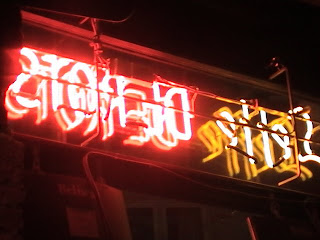
y Chas!! de mi intuición apareció la zona llena de neones y gotas

que me recordaba mogollón a Fuenca

mira: este sería el mercado, por aquí andaría el Diesel...

y reafirmé el hecho de que pronto van a ir cayéndome otras 4 rastas

Al final pinche italiano con peperoni de palo, me da igual lo que me digas

no nos han invitao a los chupitos como a los de al lao, nos la pela, ¡un cigarro!

Queríamos volver a encontrar la zona más mágica

hay una tienda GARCÍA con tu apellido ahí en lo alto,

lo conseguimos! y nos lleva hasta aquí y ahora ERIN

Y el De Rots es cojonudo, y ya está


He estado en los mejores bares de luces rojas y verdes

hay una armonía en que el tranvía doble la esquina fluyendo con nosotros químicamente a través de las ventanas

Estar aquí, aquí en el heavy, aquí en el jazz, aquí el rock&roll con sus estridentes guitarras

maldita puta-coño ya sea, estridentes estridentes guitarras!

y me pregunto, qué sería de una batería sin su alfombra

yo pensándote, yo sintiéndote

leer los comentarios cachondos de las puertas de los baños

te hacen saber lo que te haces

"A girl has got to do, what a girl has got to do"

Tocando el mundo con las manos

encendiéndome los tabacos con tu mechero, que al final te lo dejaste la vez pasada

cigarros de liar, porque aquí están los precios imposibles

pero ostia, más imposibles estarán siempre las gargantas


La envidia camino del destierro

por tanto tiempo cavando su propia tumba,

yo lo he intentado


Energía explotando energía explotando_

qué significaría el interrogante de la peli que vimos anoche

y dibujar mil veces el simbolito este de la casita que no puede levantar el vuelo en posavasos

Fumar es divertido, y parte del trato

V I D A

me doy un abrazo a mí misma, De Rots

de rots, de rots, de rots, amo a rabiarrrr------


La gente se sienta a las mesas y despliega sus trastos

(siempre esta urgencia, Silvi, siempre esta urgencia), tal

los abrigos por un lao / las bebidas por el otro

No quiero sacar tajada de todo esto, joder, me da la risa

esa no es ni será nunca posible imposible filosofía, 

el placer está en SENTIRLO, es la naturaleza, como la comida y el sexo

es que te lleguen a pasar todas estas cosas como sabes que te pasaría: JUVENTUD

y empiezas a recordar que sí justicia

juventud juventud, lo repetiría hasta la muerte, dame vida

y si no lárgate, no conseguiré volver a verte


la peña se comunica a distancia en medio de todo este escándalo, se conocen de antes

mira, como si me fundo esta noche el cuaderno, no se trata de eso

se me ha pegao estos días decir mucho "qué bueno"

no sé parar quieta, no sé, no sé, no sé

Anda Paquito cielo, ve y agarra otras dos birras

ya he entendido las reglas del juego

I understand now what the hell we're the fuck here for

en Bélgica también sabéis divertiros!!!

SOIS UNA PEDAZO DE BANDA


Another De Koninck ya recorre la garganta

no, si sé hablar dutch pero no me apetece... nah, mentira / jaja

estoy esperando al tranvía desde la ventana

voy a sacarle el planazo que se merece

pensamiento escritura vida literatura

metaliteratura, no venga, intentamos no rallarnos

a algunos no nos queda más remedio, coño ya putos intelectualitos, venga

me llevo descojonando un buen rato

me estoy meando


Cuesta creer que fuera de esto la vida siga_

Afonía desde el temblor, mensaje para mi tráquea: colecciona vinilos

YO HE NACIDO PARA ESTO

(antes de escribir estas mayúsculas, estaba pensando en Amar)

Están cambiando un poco la versión

pero se lo pueden permitir, porque tocan deputamadre, lo entienden

Seek and destroy  de Metallica


Hoy llevo mis greñas agarradas

el fularcillo verde que sabéis que me encanta,

liberación en el ambiente

destrucción metalera, vale

ya tuve mis juicios / ya destrocé coches

el público ruge: we want more!, el público manda

Entendí a Dover cuando decía sick, pero ya no hay enfermedad, ya queda magia

ya sólo sensibilidad extrema a cada paso

No pasa nada: yo de aquí no me muevo!!


(he arrancado la página del policía, nunca me gustó, era fea, no ERA)


Acabo de pillar a un duende en el lavabo

nada, bisexual, pequeña, desternillante

la he despedido llamándola beautiful

y me he quedao pensando en la psicodelia, descojonando_

Sí, tendríamos que estar estudiando, pero sabes, we're only improvising, my love

Hablar beber fumar besar, todo es por la boca


Rasta adventure: No me lo puedo creer, me están haciendo una rasta

Paco, estamos bendecidos (¡por el diablo!)

Me ha venido la chica esta en plena reencarnación del anillo de la mano derecha de los hilos de la manta de América, Erin

y está siendo un cielo de favorazo, jaja, ¡ha venido ella! (tendré que pagarla? jajaja)

Dice que no está segura de si va a funcionar

le digo que no sé, que nos fiamos las dos de su instinto, que igual podemos intentar lo que es ya ensuciarlo, se ha ido a preguntar

save the night, joder!, sólo tienes que quedarte aquí sentaíta y Esperar

Die die die my darling / Misfits

Turo, he escrito tu nombre en el baño, como me gusta llamarte

Le pasé nuestro quinto ticket a la chica, ¡a güevo!

qué acento tan quédate-cerca tenéis los latinos

y en la puerta, jaja, Push to escape


en el ojo del huracán


pues este cigarro va a ser fumado a pachas

con los Rolling de fondo, somos apaches

somos indios, cabrón!

bueno, tú más que yo, pero yo también un rato


Este grupo de ahora es más crudo,

la música amansa a las fieras, todo esto lleno de ogros, y la música es el secreto divino

es la clave

controlar la vibración de las cuerdas, electricidad de mis palabras preferidas

En otra vida he sido groupie, en esta rock&rollera

que se folla al alma del grupo_

Calaveras y gente bailando a lo Elvis, todo sano

amor en todas partes, dondequiera que mires

TÚ a cada instante, amor, es que eres mi vida

Motörhead is in the building

rock&roll is in the house

Es época de crisis, y de mirar p'alante

Escan está encantao en Lavapiés, con Dano, cuánto me alegro por él

mantenemos el contacto en privaos del foro

y todo el afecto y todo el cariño

es época de principio y fin controlado, es infinita


Se dice normalmente para porros, pero es igual

fumar a lo americano, no puede tocar el suelo

el porro tiene que estar a tope

Todoelmundo

fuma

tanto


- ...a mí me sale un plano mediocre

- te jodes

(y hablar en plata y fumar en claro

dime que es la primera vez que te duelo)


No dejes nunca de rular, compañero

(joder, ya me doy cuenta, ya

de que aquí en esto que escribo ¡hay mucho tabaco!)

(me da que me voy a quedar con las ganas del plano

porque ya no se están dando las circunstancias,

no pasa nada, un grado de insatisfacción tal me equilibra, me satisface)

Rof debe ser podredumbre

no! no pensamientos negativos, no critiquismo

vengo vestida tal y como soy

pura magia, me voy acostumbrando, pura magia

no me agarra el pedo ni a la de tres

y esa es parte de la mejor parte,

me entero de todo y voy a acordarme

ves, esta hiperconsciencia pues no me hace daño

La vita va rolando rola tras rola, chido

"para bailar la bamba!

para bailar la bamba se nesesita una poca de grasia!"

things that fall apart, dont even take place anymore

Somos los Painkillers!!         (firmao por ambos)


El hecho de que mi madre el año pasao a sus 48 añazos pensase como de refilón pero aposta

el tema de cambiar su firma anterior en la que ponía María Dolores, por empezar a poner tal cual Lola Aguado

es una esperanza joder, es una puta esperanza

Es que al cabo de tantísimos años uno sigue pensando, coño, tan en contacto con esas pequeñas cosas, me enternece

son las más importantes: quién eres, y cómo decides ir sentenciándolo


y ahora de repente soltar "extraoficialmente", no?


Me matan las guitarras de flecha, verdad?

more! more! more!

I show my cards, you show me yours

Look me in the eyes, cmon and look me in the eyes, what do you see_

la experiencia

"I saw you" le he dicho con la mirada al gamberro exhibicionista del otro lao de la ventana,  I saw you

(ya estoy pensando de a quién mandar esto:

Escan, Josep, Paco, Neiria, Turo en principio)


Y si ahora os da por improvisar grunge, a mí me mueve

posiblemente la mejor noche espectacular en Bélgica: se mueven solas las piernas,

y joder, arriba tiene los billares

uno americano y un belga

he robao la tiza azul y me he pintao los ojos

meando me he dicho "es que no puedo parar de escribir, es que no puedo!"

al bajar Paco me ha dicho "qué linda"

todo es verdad, todo es sincero

vivo en ello, y por eso me doy cuenta de que no hay nada mejor, no puede haberlo

lo demás es soledad y es necesaria, pero no es ESTO

os echo de menos, perros, os kiero

las kas son cruciales para certainísimas cosas, y además:

prohibido NO fumar

y no, fumar no puede matar, FUMAR MATA

HAY QUE DEJARSE LA VIDA, ostia!


me encanta cuando te salen solas las cosas de la boca, las movidas sin pensarlas

sólo sintiéndolas, y ya nos vamos del bar, y lo último que he soltao ha sido: WAUH!...


Three little birds (Bob Marley)

http://es.youtube.com/watch?v=RntL-2uwt_g